How to Choose a Professional Fishing Net

Choosing the right fishing net directly influences the performance of professional fishing. In this article, we explain how to assess fishing gear, mesh and the most suitable type of net for each operation.
In professional fishing, efficiency does not depend only on the crew’s experience or the fishing area. The net used directly impacts operational performance, handling, catch selectivity, and equipment durability.
An unsuitable professional fishing net can increase working time, cause premature wear, make gear assembly more difficult, and compromise the operation’s profitability. For this reason, choosing a professional fishing net should be a technical decision, adjusted to real working conditions.
Rather than looking for the strongest net, it is important to understand which solution is the most efficient for each context.
The Right Net for Each Fishing Method
Each fishing method requires a net with specific characteristics. Depth, currents, seabed conditions, target species, and how the gear is handled on board all influence the final performance.
Gillnets do not work in the same way as nets used in seine fishing. While gillnets depend heavily on the mesh size and how fish are retained, seine fishing requires a structure capable of withstanding greater effort during operation.
Drift netting, trammel nets, and longlines also involve different technical requirements. In many cases, performance depends not only on the netting itself but also on how the entire fishing gear is built and assembled. Therefore, each fishing method should be assessed according to:
  • Target species and average catch size;
  • Fishing area and depth;
  • Type of fishing gear used;
  • Frequency of use;
  • Current and seabed conditions;
  • Need for complete assembly or only netting replacement.
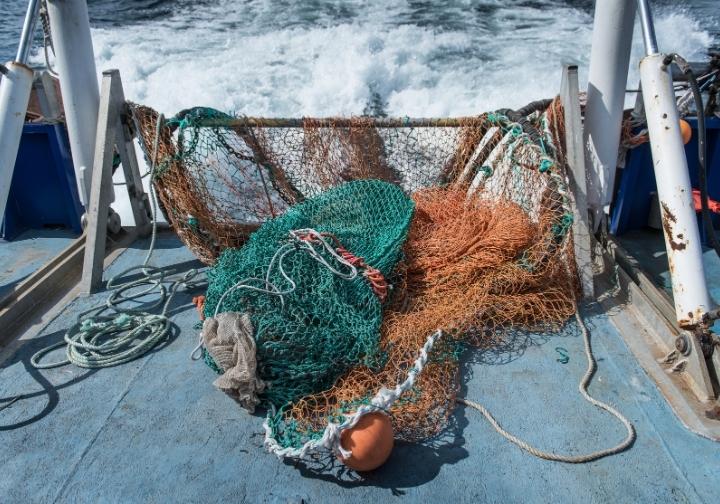
This analysis helps avoid generic choices and makes it possible to define the net material, mesh, line and finishes more precisely.

Types of Fishing Net: Monofilament, Multifilament, and Multimonofilament

Among the various tools used in professional fishing, nylon nets remain an essential solution. Polyamide is valued for its strength, natural elasticity, and adaptability to different fishing methods.
However, an efficient fishing net does not depend only on the material. Line diameter, construction type, fishing net mesh size, and knot type also influence how the net behaves in the water and how effective it is during fishing.
In gillnets, mesh is especially important. If the mesh is too small, it may compromise catch selectivity. If it is too large, the target species may escape through the net.
The goal is to catch more effectively, with greater control, less waste, and more predictability. To that end, each type of net has characteristics that should be considered according to its purpose:
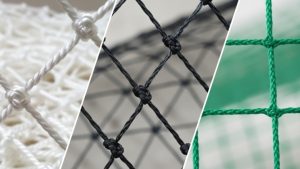
  • Monofilament nets: made from a single nylon filament, ranging from 0.28 mm to 1.10 mm in diameter, and stand out for their low visibility in the water, lightness, and ease of handling;
  • Multifilament nets: made from several braided filaments in high-tenacity Nylon 6.0, they offer strength, high breaking resistance, and durability;
  • Multimonofilament nets: combine several monofilament strands, with configurations ranging from 0.20 mm x 4 strands to 0.20 mm x 16 strands, balancing strength, elasticity, and versatility.

The Influence of the Line on Net Performance
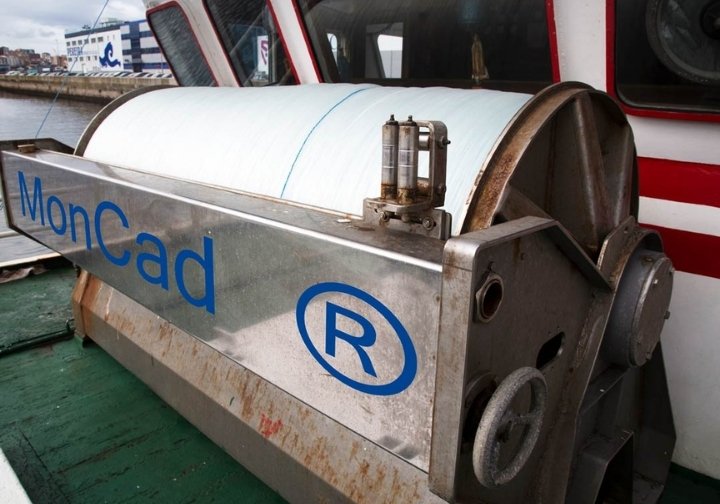
Once the type of net has been defined, line quality becomes the determining factor for gear performance. The monofilament’s uniformity, high abrasion resistance, and knot strength ensure superior stability throughout use.
For fishing nets, Cadilhe & Santos developed MonCad® V55 polyamide monofilament, suitable for manufacturing nylon nets ranging from 0.15 mm to 1.20 mm. Its uniform thickness contributes to a more stable net, making it suitable for professional use.
In longline fishing, the requirements change. The working system, depth, and continuous effort of the operation require lines adapted to each scenario. For surface longline, the answer is MonCad® Z60, developed in copolyamide, a combination of different polymers that delivers superior flexibility and knot resistance, along with full invisibility in the water. For the demanding conditions of bottom longline and handline fishing, the MonCad® XL60, L60 and Z60 monofilament range ensures reliability, with multiple diameters and formats perfectly suited to each operation.

Fishing Gear Assembly: Why It Matters

Even when the net and line are suitable, assembly can affect the gear’s performance. In professional fishing, this process must be adapted to the type of catch, the fishing area, and the shipowner’s requirements.
In seine fishing, assembly can include only the netting or the complete gear with ropes, buoys and lead weights. For gillnets and trammel nets, assembly can be carried out with new material or by reusing ropes and buoys, provided they are in suitable condition.
For longlines, specialized manual assembly enables adjustment of each component to the operation. The type of swivel, brake, pearl, and line used influences the behavior of the gear during fishing. This adaptation is essential because the same net can perform differently depending on:
  1. Applied tension;
  2. Type of rope used;
  3. Distribution of buoys and lead weights;
  4. Reuse of existing materials;
  5. Final adjustments required for the gear to be ready for operation.
Ready-to-use fishing gear reduces preparation time, avoids improvised adjustments and allows the operation to start with greater safety. In professional fleets, this means fewer stoppages, better organization, and greater control.

Strength, Handling, and Operational Cost

A fishing net is exposed to demanding conditions. Saltwater, abrasion, mechanical tension, sun exposure, and frequent handling accelerate material wear.
For this reason, the real cost of a net is not only its initial price. It is also linked to durability, repair frequency, and the ability to maintain performance throughout the fishing season.
At sea, excessive net weight compromises on-board agility, while poor sizing puts the operation’s responsiveness at risk. The right balance lies in a robust solution that optimizes the entire operational flow, ensuring maximum efficiency when:
  • Setting and hauling;
  • Organizing and storing;
  • Repairing when needed.
When this balance exists, the crew works more efficiently, and the operation becomes more predictable. Small improvements in handling can represent important gains over an entire season.

Net Maintenance: How to Extend Service Life

To maintain performance over time, proper maintenance is essential. After each use, nets should be checked for tears, deformation, damaged knots or localized wear. Cleaning and correct storage also help extend the material’s service life. A simple maintenance routine should include:
  • Visual inspection after each trip;
  • Removal of accumulated debris and organisms;
  • Proper drying before long-term storage;
  • Repair of damage before the next use;
  • Separation of nets by type and condition.

Frequently Asked Questions

What is the best fishing net for professional fishing?
The best net depends on the type of operation, target species, fishing area and frequency of use. Monofilament nets are often chosen for their low visibility in the water, while multifilament nets are suitable when greater mechanical strength is the priority.

What is the difference between monofilament nets and multifilament nets?
Monofilament nets are made from a single nylon filament, which gives them low visibility in the water and ease of handling. Multifilament nets are made from several braided filaments, offering greater strength for higher-effort gear.

How should the mesh of a fishing net be chosen?
Fishing net mesh should be defined according to the target species, average catch size, fishing method, fishing area, and applicable regulations. A well-sized mesh improves selectivity and increases operational efficiency.

Does assembly influence net performance?
Yes. A technically suitable net can lose efficiency if the assembly is not adjusted to the fishing gear. Ropes, buoys, lead weights, knots, and finishes influence how the net behaves during the operation.
Choose the Right Fishing Net for Your Operation

An efficient professional fishing net results from a balance between material, mesh, strength, assembly, and real working conditions.
At Cadilhe & Santos, we develop professional nylon fishing nets, including monofilament, multifilament, and multimonofilament nets, tailored to each client’s needs. In addition to in-house manufacturing, we have an experienced team in fishing gear assembly, prepared to meet the requirements of different markets, shipowners, and fishing areas.
Tags:
Partilhar:

Também lhe poderá interesar