Agricultural production is exposed to external factors that influence crop development throughout the entire growth cycle. Even with proper practices in place, final results remain dependent on surrounding environmental conditions.
As these factors are unavoidable, the focus should be on reducing their impact. This level of control helps stabilize production and improve long-term agricultural yield.
Factors That Affect Agricultural Production
In the field, challenges rarely occur in isolation. They tend to appear in sequence, often with significant impact.
Wind can weaken structures and affect plant growth. Heavy rain or hail can cause direct damage. During hotter periods, excessive sun exposure can cause thermal stress in plants and compromise quality.
On top of that, birds and other invasive agents can gradually reduce agricultural production without immediate visibility. These crop losses accumulate throughout the growing season.
The issue is not each factor individually, but how they repeat over time. When crops are constantly exposed, variability increases, leading to less consistent results.
Agricultural Nets: How They Protect Crops
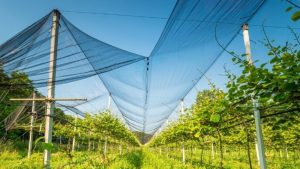
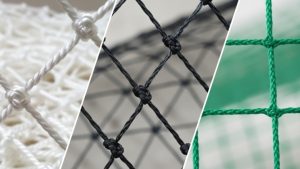
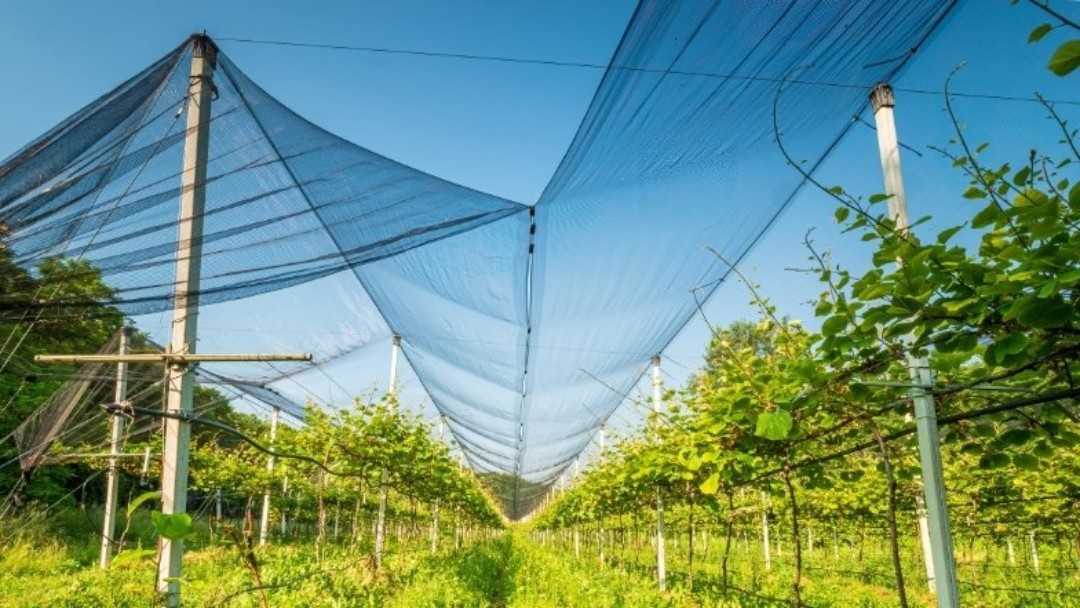
In this context, agricultural netting plays a key role in crop protection. Not as a standalone solution, but as a way to reduce the impact of environmental conditions on crops.
By creating a physical barrier, they protect plants without compromising their development. These nets are designed to withstand environmental conditions and incorporate UV stabilization additives that ensure durability, even under prolonged sun exposure.
How Agricultural Netting Works
The effectiveness of agricultural nets lies in their ability to act on multiple factors simultaneously. Key benefits include:
- Reducing the force of wind on crops;
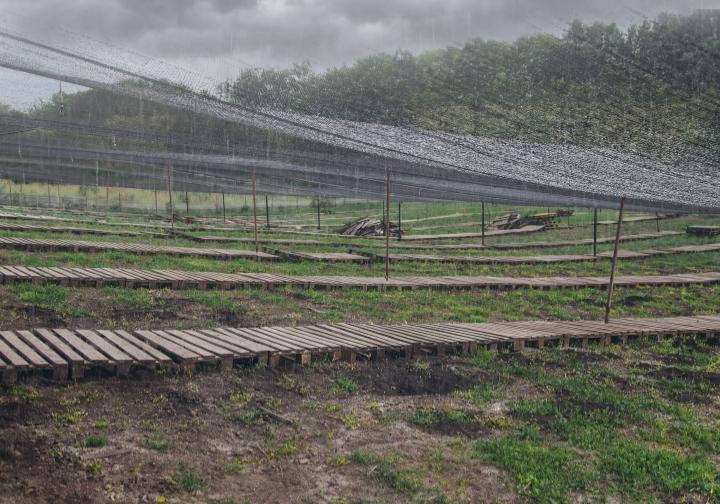
- Minimizing the impact of heavy rain, frost, and hail;
- Limiting access from birds and other invasive agents;
- Creating additional protection against external risks that cause crop losses.
Rather than eliminating risks entirely, they reduce their severity. This makes a significant difference throughout the production cycle.
How Agricultural Nets Improve Agricultural Yield
With the crop protected, the main difference is seen in consistency. Production becomes more uniform, quality more stable, and losses decrease throughout the process.
Instead of relying on ideal conditions, operations become more predictable. This results in:
- Less waste: reduction of losses from climate damage and pests;
- More consistent harvests: more predictable production cycles;
- Higher-quality final products: fewer defects and superior classification.
More than simply increasing output, the focus shifts to producing better results with greater control.
To help you choose the most suitable solution, we present the main applications of agricultural nets across different production contexts:
- Vineyards: protection against wind, birds, and hail;
- Orchards: protection against birds and hail;
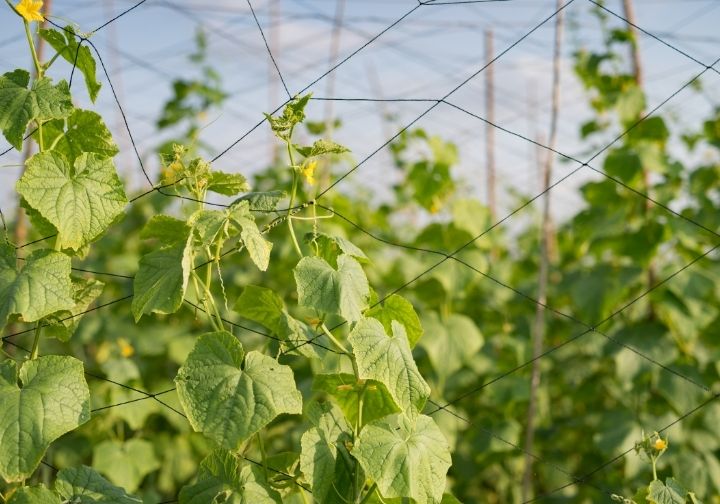
- Greenhouses: protection against heat stress and pests;
- Horticulture: protection against wind, heavy rain, and birds.
Types of Agricultural Nets by Application
Every farm operation has its own specific conditions. Crop type, location, and environmental exposure all play a decisive role in choosing the right crop protection solution.
For this reason, a generic approach is rarely effective. A tailored solution allows direct response to the factors affecting production without creating unnecessary constraints.
When protection is designed for the real operational context, results become more stable over time. Agricultural netting should be dimensioned considering:
- Crop type and plant height;
- Predominant exposure (wind, sun, rain);
- History of crop losses on the farm;
- Period of use (seasonal or permanent);
- Available support infrastructure.
More Efficient Agricultural Production
With fewer losses, it becomes possible to make better use of resources and organize production processes more efficiently. This level of control is increasingly important in a context where climate variability directly impacts agricultural output.
Agricultural nets contribute to more sustainable farming by:
- Reducing the need for replanting;
- Decreasing use of plant protection treatments (fewer pests);
- Optimizing water use (lower evaporation in protected crops);
- Enabling more rigorous harvest planning.
The result is more predictable production and more stable agricultural yield over seasons.
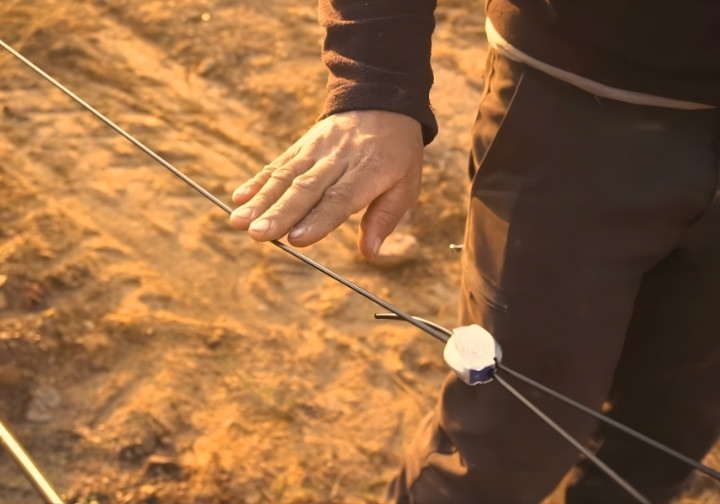
Monofilaments for Vineyards and Orchards: MonCad® A60
Technical monofilaments, such as MonCad® A60, offer an alternative to traditional wire, combining strength, lightness, and durability.
Made from high-tenacity polyamide, the MonCad® A60 vineyard monofilaments offer:
- Reduced weight: faster installation, lower structural load;
- Do not conduct electricity: greater safety in humid environments;
- Do not absorb heat: prevent thermal damage to plants;
- High tensile strength: withstand tensions in vineyards and orchards;
- Chemical resistance: compatible with plant protection treatments;
- Integrated UV protection: durability under prolonged sun exposure.
This solution increases long-term stability and reduces maintenance for more efficient operations.
Frequently Asked Questions
Do agricultural nets reduce sunlight?
Yes, agricultural netting reduces light intensity but does not block it completely. They are designed to maintain optimal growing conditions and prevent thermal stress situations.
No, they complement them. They act as a physical barrier and should be integrated with other crop protection practices, depending on each farm’s specific needs.
Yes. Solutions can be tailored based on crop type, area, and environmental conditions, ensuring greater effectiveness in the field.
Yes. Investing in technical agricultural nets reduces crop losses, improves agricultural production quality, and increases agricultural yield stability over time.
The durability of agricultural netting depends on the material and the level of exposure. Polyamide (PA) nets with UV protection last between 5 and 8 years. Polyethylene (PE) nets can last 8 to 12 years in permanent outdoor applications. Proper maintenance extends service life and maintains crop protection effectiveness.
Yes, but minimal. An annual visual inspection is recommended to detect mechanical damage, clean accumulated debris (leaves, branches), and check fixing points. Proper preventive maintenance ensures the continuous performance of agricultural protection systems.
Increase Your Agricultural Yield with Technical Solutions
Crop protection should not be seen solely as a preventive measure. When properly implemented, it becomes an integral part of agricultural production, contributing to more stable results and superior yields over time.
At Cadilhe & Santos, we develop agricultural protection systems tailored to each farm operation, focusing on durability, resistance, and real-world performance. We work to ensure each system responds to concrete field challenges and helps reduce crop losses and improve agricultural yields.
Get in touch, and our team will analyze your specific needs and present agricultural netting solutions suitable for your production context. We help choose the most effective system to increase your agricultural production.