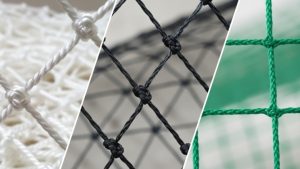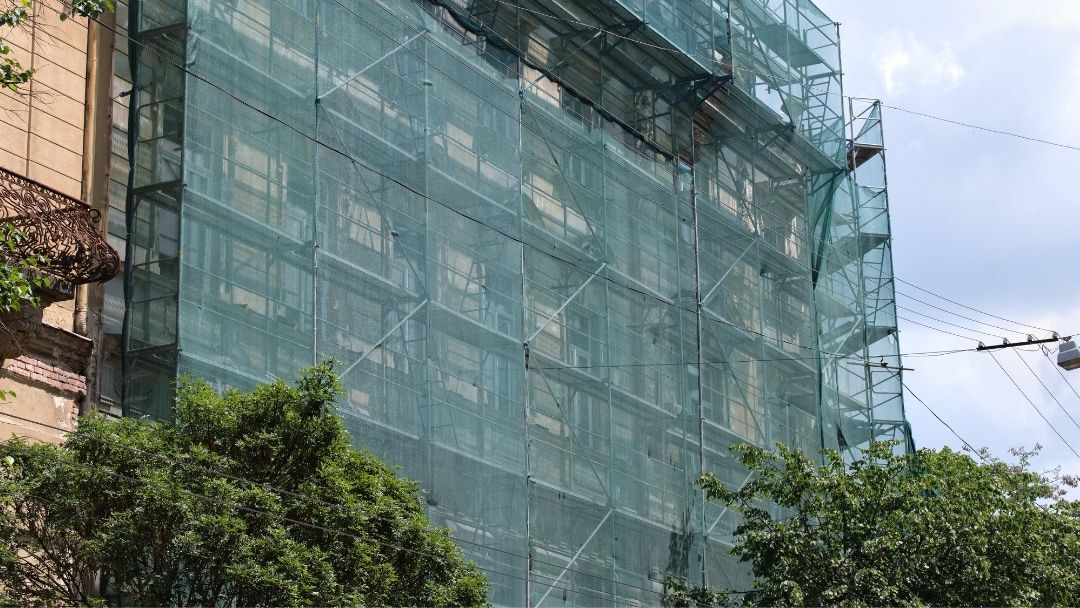
On an active construction site, especially during work at height or façade operations, risk is constant. The movement of workers, the handling of materials, and the overlap of multiple tasks create an environment where prevention must be embedded directly into the operation.
In this context, safety nets are no longer a secondary measure; they become a primary element of site protection. They become a structural element for protecting work areas and maintaining safety on construction sites.
Falls from Height: A Permanent Risk on Construction Sites
Falls from height occur primarily in predictable areas of construction sites, such as façades, slabs, roofs, open edges, and elevated platforms. In these zones, risk is permanent and inherent to the nature of construction work itself.
Unlike individual protection, which depends on worker behaviour, collective fall protection systems provide continuous passive safety. Safety nets are specifically designed to address this type of ongoing exposure. They function as containment systems that absorb the energy of a fall and limit its consequences, creating a safety margin that evolves alongside the construction process.
Object Containment and Protection of Third Parties
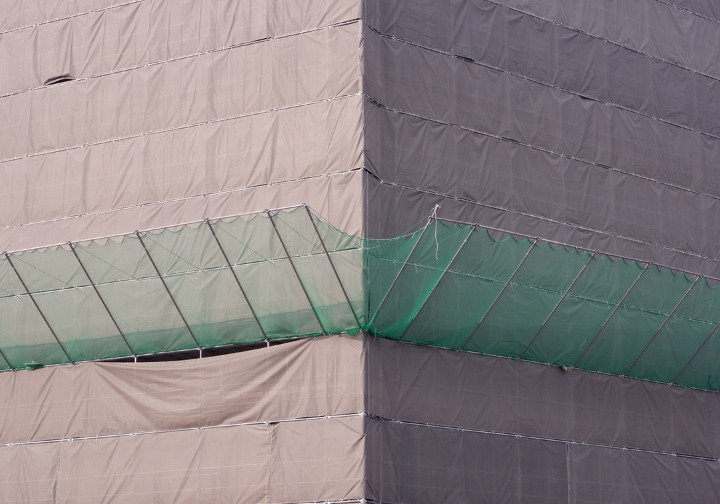
On many sites, safety nets fulfil a dual function. In addition to protecting workers, they contain tools, concrete fragments, and loose materials, significantly reducing the risk of accidents in lower areas.
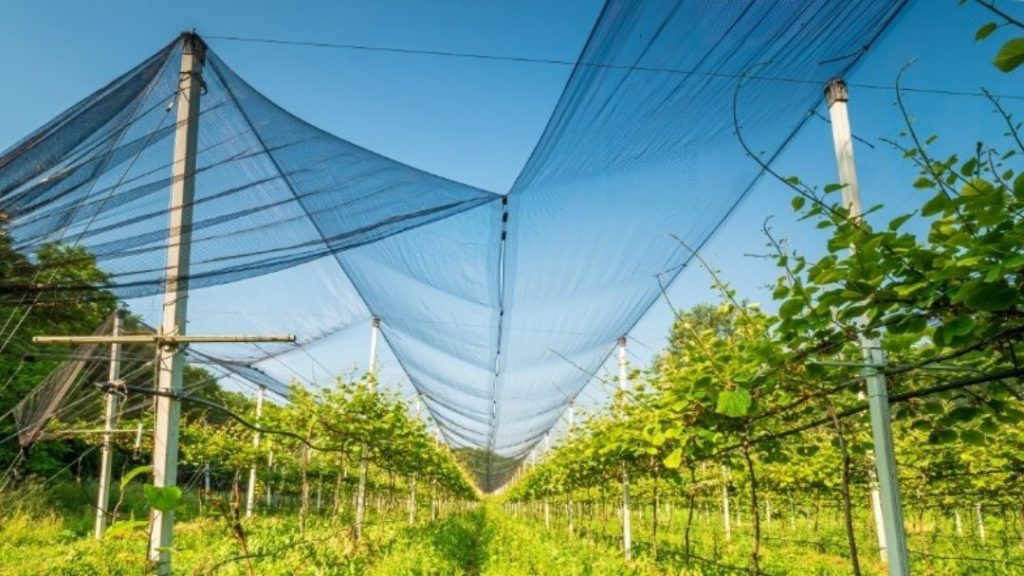
This role is especially critical in urban construction and renovation projects, where proximity to public roads, pavements, or neighbouring buildings requires strict control over falling objects. n such cases, high-tenacity safety nets are often combined with shading meshes or fine-mesh netting to prevent even the smallest debris from reaching public spaces.
Choosing the Right Net for Each Application
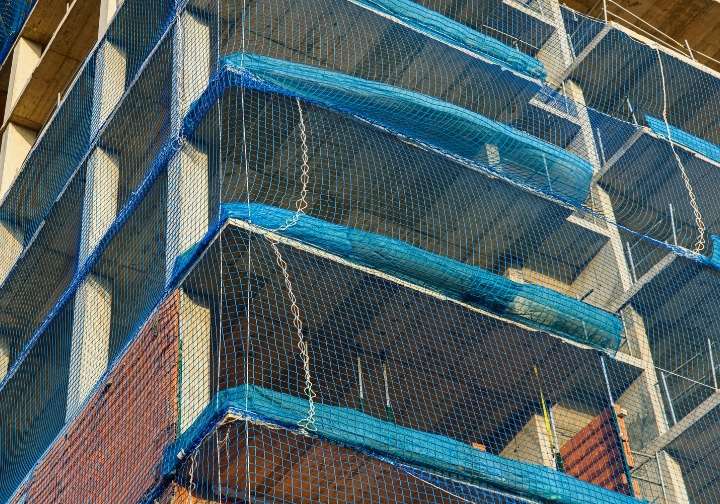
There is no “one-size-fits-all” solution. Selecting the appropriate construction safety net depends on the geometry of the work area, working height, duration of the construction phase, and exposure to environmental conditions. The European standard EN 1263-1 defines four main systems according to application:
- System S (Safety Net): Traditional horizontal nets with a reinforced border rope, used to protect floor openings and industrial structures;
- System T (Tray): Nets mounted on metal brackets fixed to façades, forming a perimeter protection “tray”;
- System U (Vertical): Vertically installed nets used to enclose scaffolding and protect slab edges;
- System V (Potence): Nets supported by cantilever arms, designed for large vertical openings.
Cadilhe & Santos always recommend a prior technical assessment of the site geometry to determine which system, or combination of systems, ensures full coverage without interfering with construction operations.
Materials, Durability & Resistance
The durability of a safety net is defined at a molecular level. Construction safety nets are exposed to harsh conditions, including intense UV radiation, humidity, and mechanical abrasion. Material selection is therefore critical:
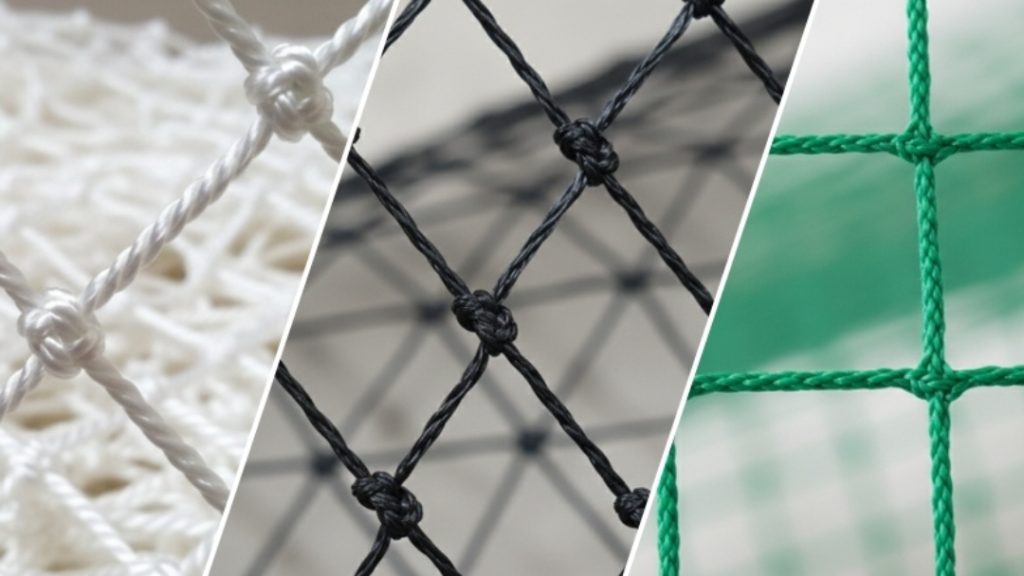
- High-Tenacity Polyamide (PA): The preferred material for impact absorption, particularly in System S nets. Its high elasticity allows it to dissipate fall energy without rupture, which is essential for fall protection systems.
- Polyethylene (PE) and Polypropylene (PP): Commonly used in façade netting and vertical systems, where abrasion resistance, low weight, and water impermeability are key.
Cadilhe & Santos safety nets incorporate UV stabilisation directly into the polymer structure. This prevents premature degradation caused by sunlight and ensures that certified mechanical strength is maintained over extended periods.
Learn more about our material technology in the article Innovations in Monofilaments for the Construction Industry.
Installation & Continuity of Protection
The effectiveness of safety nets on scaffolding, façades, and elevated structures requires specific technical knowledge, quality materials, and meticulous installation. Undersized or poorly positioned anchorage points can turn a safety net into a false sense of protection.
As construction progresses, safety nets must adapt to evolving work areas. Professional installation prevents so-called “dead zones” or improvised solutions, such as plastic ties, which compromise the integrity of fall protection systems.
Inspection & Maintenance
Safety nets are not elements that are installed and forgotten. Throughout the construction phase, they must undergo regular inspections to ensuretheir safety characteristics are maintained.
Cuts, localised wear, UV degradation, or loosened fixings require immediate intervention. A fall protection net only fulfils its role when it remains in proper condition throughout its service life.
Safety inspections on construction sites should include verification of:
- Fibre integrity and edge ropes;
- Condition of fixing and anchorage points;
- Correct net tension (without excessive sagging);
- Signs of UV degradation or mechanical abrasion;
- Compliance with EN 1263-1.
Safety as a Productivity Driver
The implementation of safety nets is not limited to legal compliance. It is a management decision. Safe working environments reduce team stress, eliminate unexpected stoppages caused by accidents, and ensure that construction schedules progress without disruption. Investing in fall protection systems means investing in operational predictability and corporate reputation.
Safety Nets Tailored to Each Construction Project
Every construction site presents unique challenges, whether due to façade geometry, building height, or phased execution. Standard solutions are not always sufficient to address real-world site conditions.
Cadilhe & Santos provides customised safety netting solutions developed to meet the specific requirements of each project. Our expertise in technical monofilament extrusion allows us to fine-tune tenacity, mesh size, and finishing details, delivering solutions that combine maximum safety with the operational demands of modern construction.
Contact us and ensure maximum safety on your next construction project.