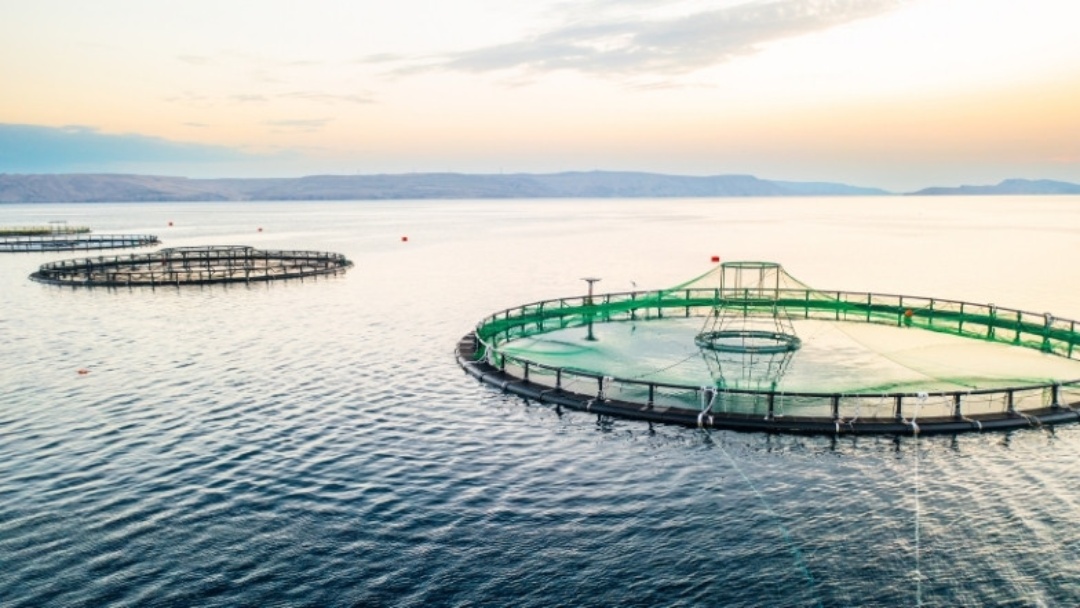
Aquaculture has been steadily growing and now plays a significant role in national food production. However, this progress also brings important challenges. Whether in land-based fish ponds or in net cages located in open water, interaction with wildlife is an unavoidable reality that demands rigorous preventive measures. Seabirds, marine mammals and predatory fish can interfere with fish farming operations, damage structures and significantly increase the risk of escapes.
The impact of these incidents goes far beyond physical damage. When protection fails, economic losses can be substantial and production predictability is compromised. Escaped fish may also generate ecological impacts, particularly when interacting with surrounding ecosystems. For this reason, the installation of anti-predator nets has become indispensable for any fish pond or open-water net cage system.
How do Anti-Predator Nets Work?
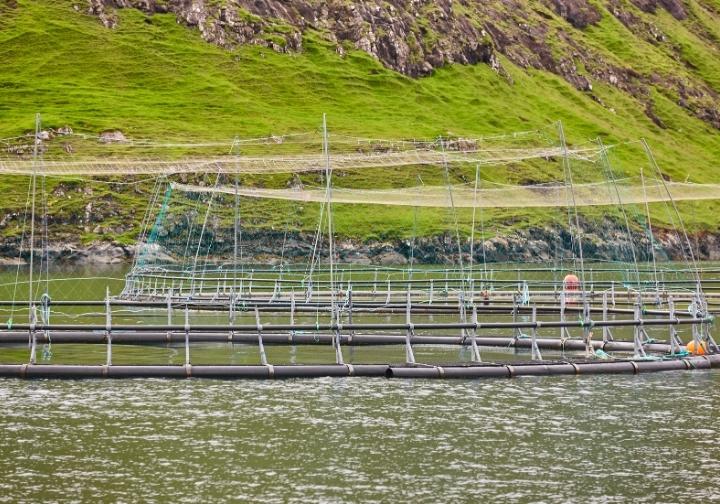
Anti-predator nets operate by creating a protective “second skin” over fish ponds and net cages. The key technical challenge, addressed by Cadilhe & Santos, is to implement a robust physical barrier that blocks access by aerial and aquatic predators without interfering with the vital conditions required for fish development. A high-performance net must ensure maximum protection while maintaining the permeability necessary for proper hydrodynamic circulation and water oxygenation, as well as preserving the natural light essential for species welfare.
High-Tenacity Materials and UV Resistance
In aggressive marine environments, the durability of protective systems depends heavily on material science. At Cadilhe & Santos, we use high-tenacity synthetic fibre solutions, including:
High-Density Polyethylene (HDPE)
The benchmark for durability.HDPE is lightweight and minimizes biofouling accumulation, making cleaning significantly easier. It offers excellent resistance to abrasion and tearing, which is critical for submerged nets or structures in constant contact with the waterline.
Polypropylene (PP)
Known for its stability and UV resistance. This lightweight material maintains its shape even under constant tension and prolonged solar exposure, making it ideal for upper net covers exposed to bird attacks and wave motion.
Technical Blends with UV Additives
Intense solar radiation is one of the main factors accelerating net degradation. To address this challenge, our solutions incorporate advanced UV treatment directly during yarn extrusion. This technology delays material embrittlement and ensures the net retains its shape, elasticity and strength even after months of continuous exposure. It is an essential protection to guarantee long service life in offshore installations or extended production cycles.
Applications of Anti-Predator Nets in Aquaculture
Protection requirements vary according to the type of aquaculture operation. However, the objective remains the same: to create a secure barrier that does not compromise fish welfare.
Land-Based Fish Ponds
In these systems, birds represent one of the main threats. Suspended net solutions prevent diving attacks and stabilise the pond environment, helping to reduce stress in fish and promoting healthy growth. To ensure full effectiveness, mesh size and net tension must be carefully adjusted to the specific characteristics of each operation.
Open-Water Net Cages
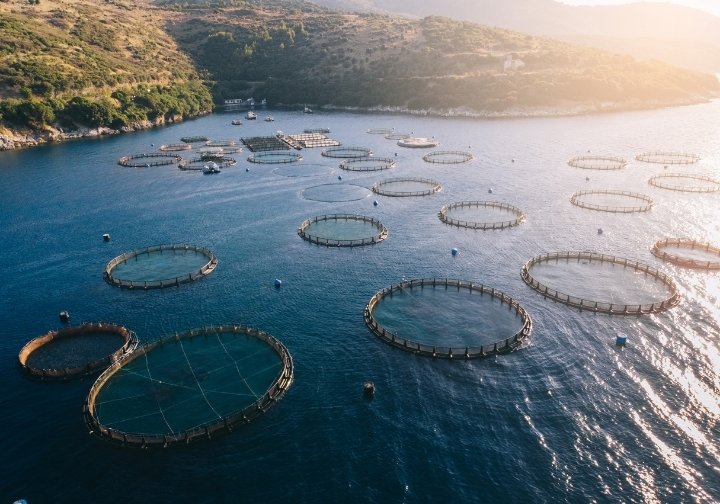
In these structures, which are typical of Portuguese aquaculture, conditions are extreme. The combined action of strong currents, wave motion and salinity accelerates material wear and tests structural resistance.
Here, anti-predator nets play a dual structural role. In addition to blocking access by large predators, they act as a protective shield, absorbing impacts from floating debris. Given continuous solar exposure, it is vital to use meshes with UV additives and high dimensional stability that do not deform under constant water pressure.
How Do Anti-Predator Nets Reduce Escapes?
Escapes remain one of the greatest challenges in aquaculture. When farmed fish perceive an external threat, they tend to react collectively, increasing the risk of structural rupture or passage through vulnerable areas of the system.
The installation of anti-predator nets reduces these incidents by preventing damage caused by predators, minimising stress-related behaviour and stabilising the overall aquaculture environment.
Reducing escapes helps preserve expected biomass, improve fish farming efficiency and ensure greater predictability throughout production cycles.
The Importance of Installation and Made-to-Measure Production
Even the most resistant mesh can fail if installation does not follow strict technical criteria. Net performance is directly linked to installation quality and the absence of vulnerable points caused by uneven tension or slack areas. It is essential to plan net distribution while accounting for water level variations and wave loads, ensuring secure anchoring. Regular inspections, especially after storms, are critical for early damage detection and the prevention of future escapes.
To mitigate these risks, made-to-measure manufacturing is the safest solution. Unlike standard nets, which require adaptations and create potential weak points, Cadilhe & Santos’ customised solutions are designed to meet the specific requirements of each operation. This allows reinforcement of high-friction zones and precise mesh adjustment to the cultivated species, ensuring comprehensive protection.
Fish production in ponds and net cages requires robust systems that prevent damage and reduce the likelihood of escapes. Anti-predator nets play a fundamental role in protecting aquaculture production and ensuring a controlled environment for farmed species. Prevention begins with choosing the right solutions, and anti-predator nets are now one of the most effective tools for safeguarding the future of fish farming and sustainable aquaculture.
Would you like to explore tailored solutions for your aquaculture project? Get in touch with us to assess the specific needs of your operation.